Representing the Remedial Herstory Project, nonprofit working to get women’s history into primary and secondary history classrooms.
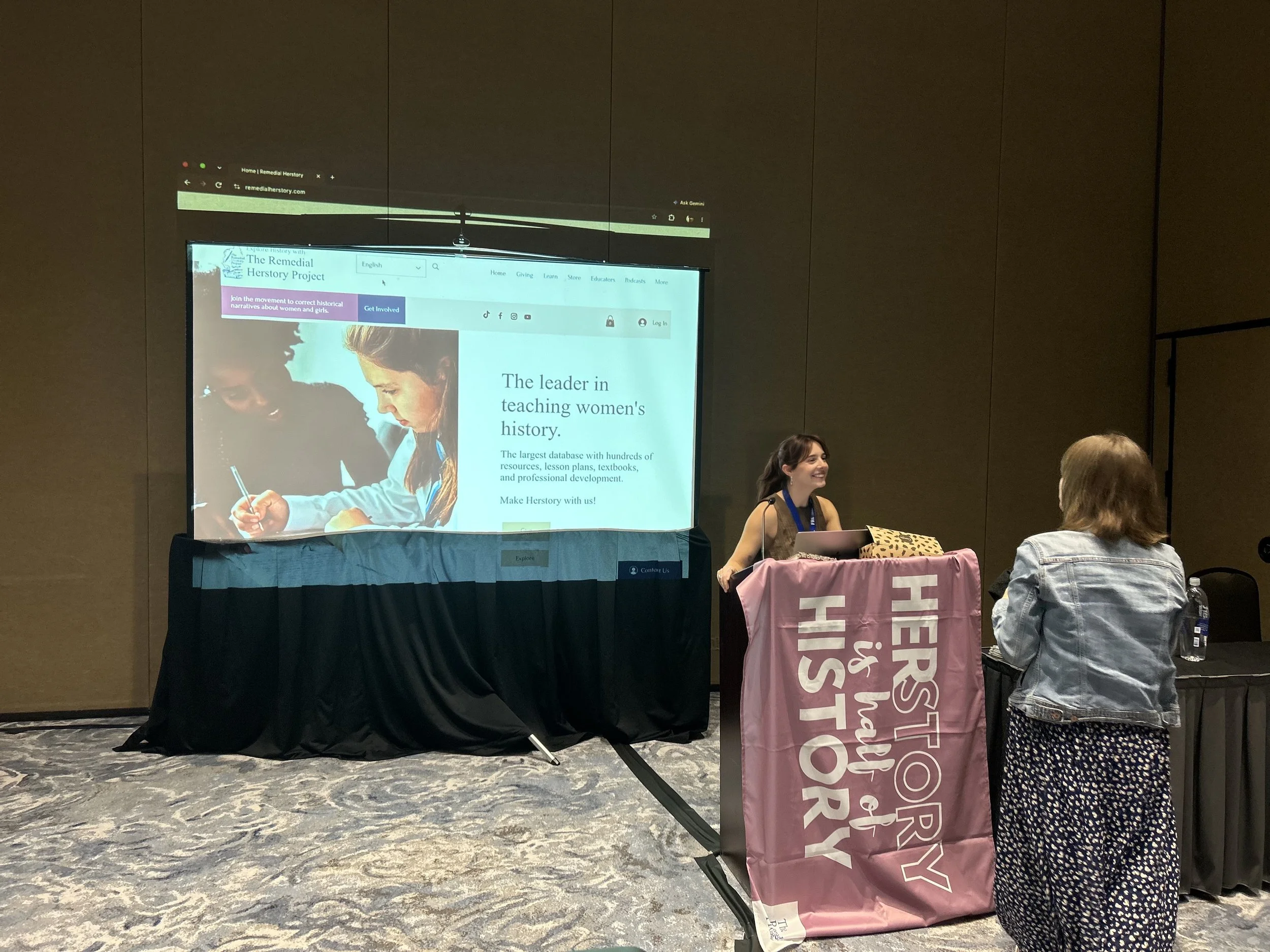
I’m the Georgia representative for the Remedial Herstory Project. We’re a nonprofit working to get women’s history into primary and secondary history classrooms.
I want to start today with a simple question: What if the problem with how we teach history isn’t necessarily what we get wrong, but what we leave out? Most of us in this room care deeply about historical accuracy, evidence, and helping people understand the past. But even when we teach history accurately, we can still tell an incomplete story.
I’m going to ask you five questions throughout our time together. After each question, we’ll look at what the evidence tells us, why it matters, and what we can do about it. My goal isn’t to convince you that women’s history is a separate subject we need to squeeze into an already crowded curriculum. It’s to show you how including women’s experiences can change our understanding of the history we already teach.
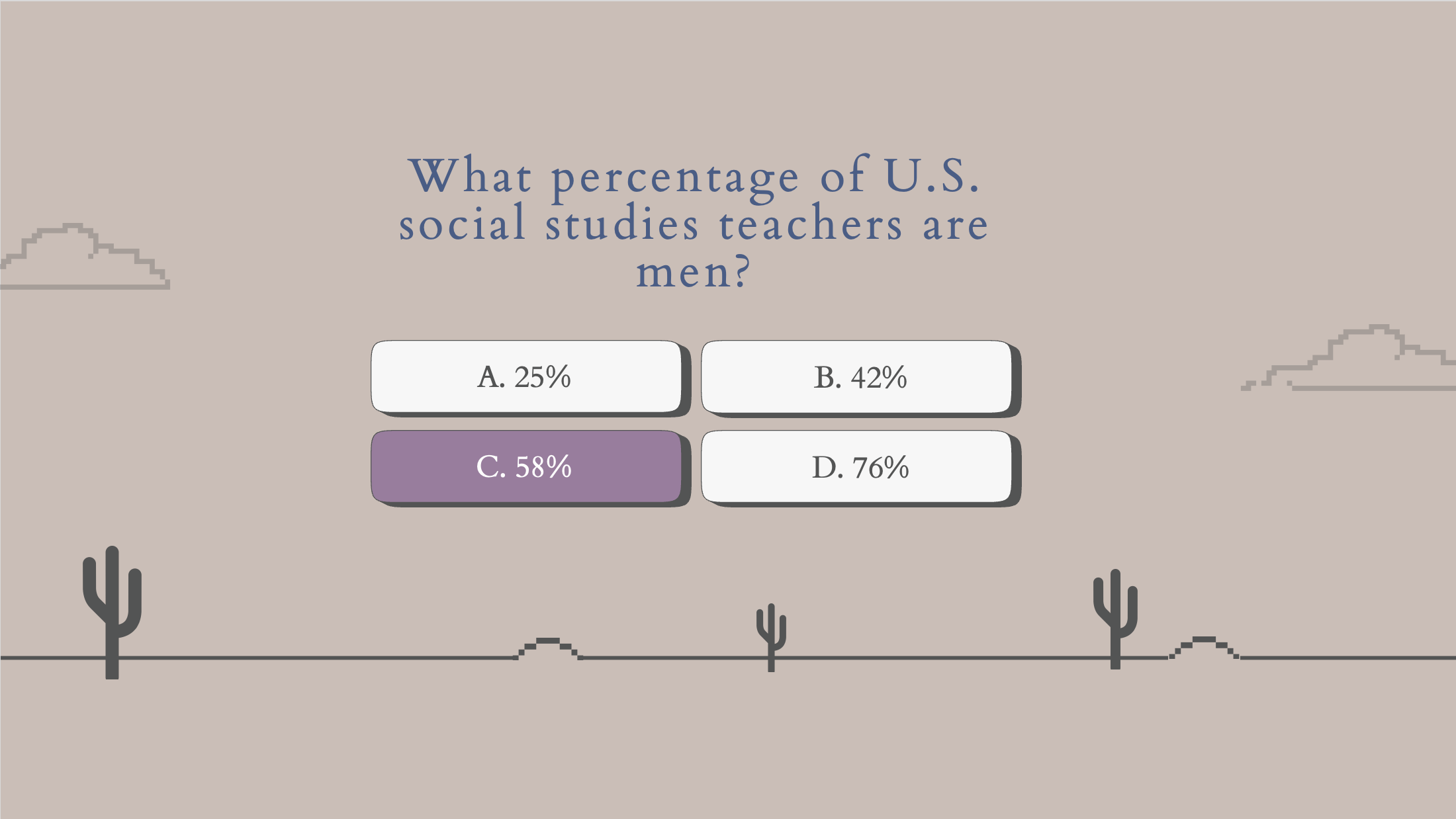
Now, the fact that men teach history is not inherently a problem. Men can and do teach women's history thoughtfully and effectively.
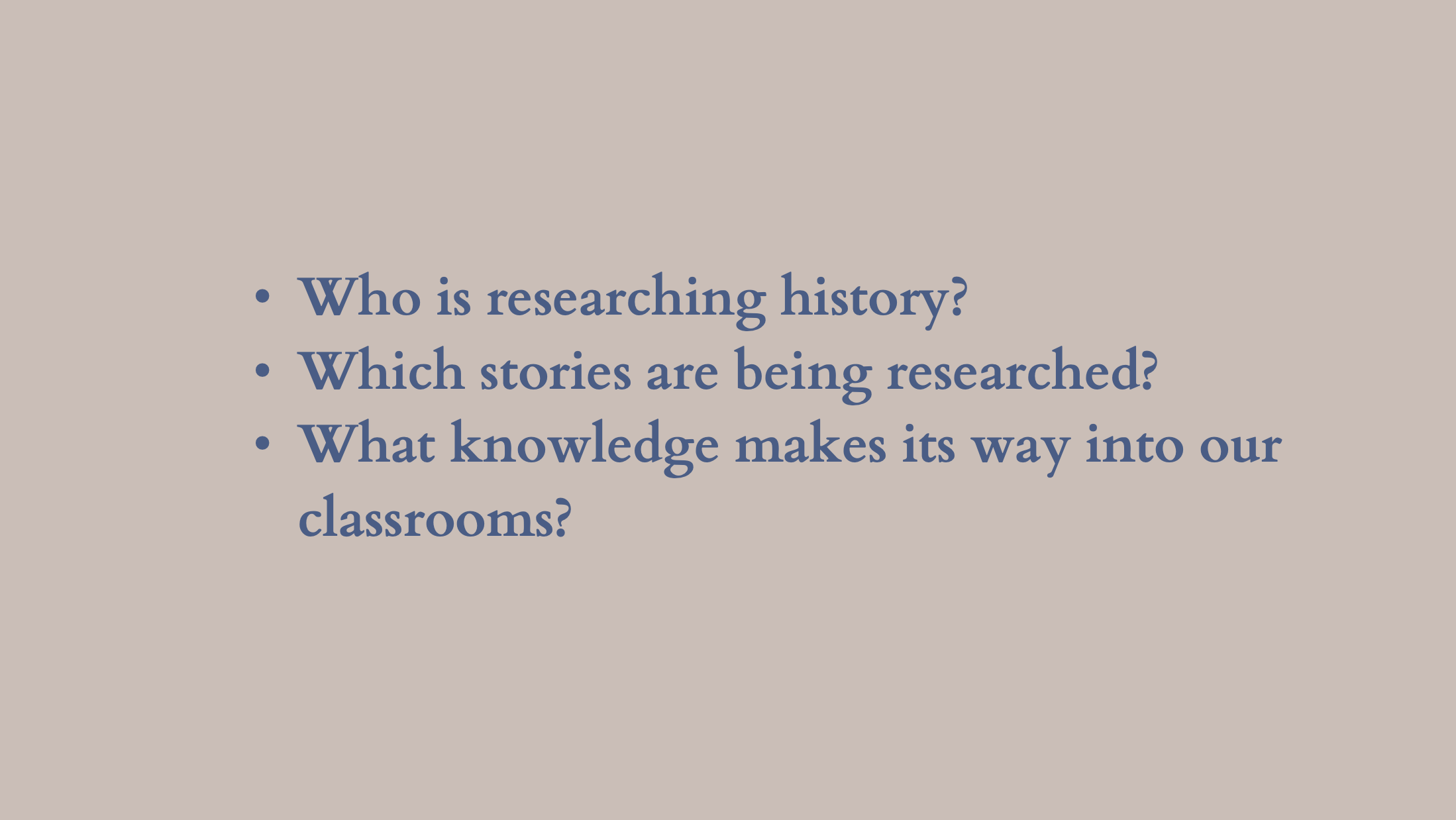
The more important questions are…
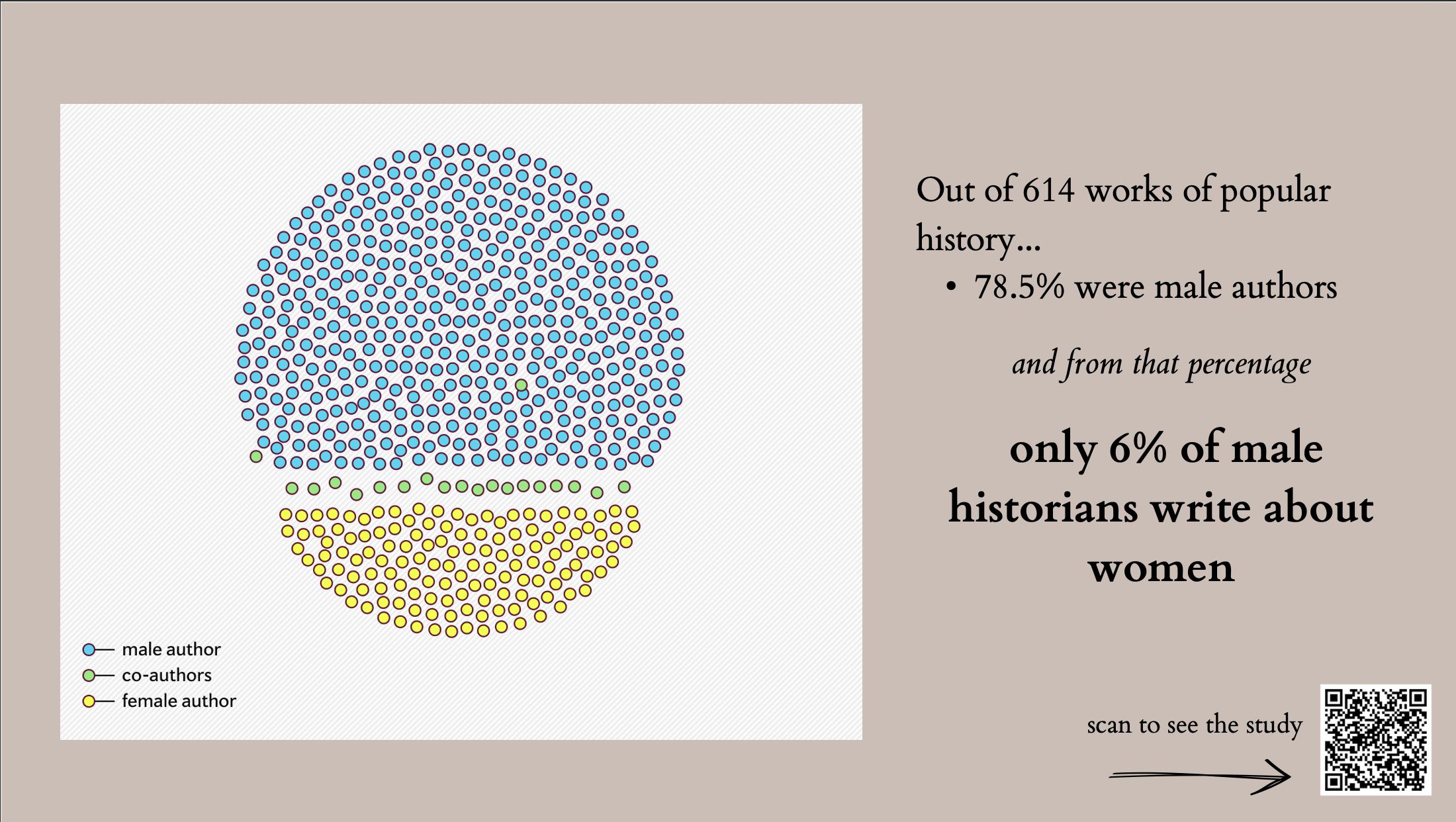
A recent study sponsored by the New York Times found that only 6% of male historians write about women. If women's experiences receive limited attention in historical scholarship, that can affect the resources available to teachers and museum educators.
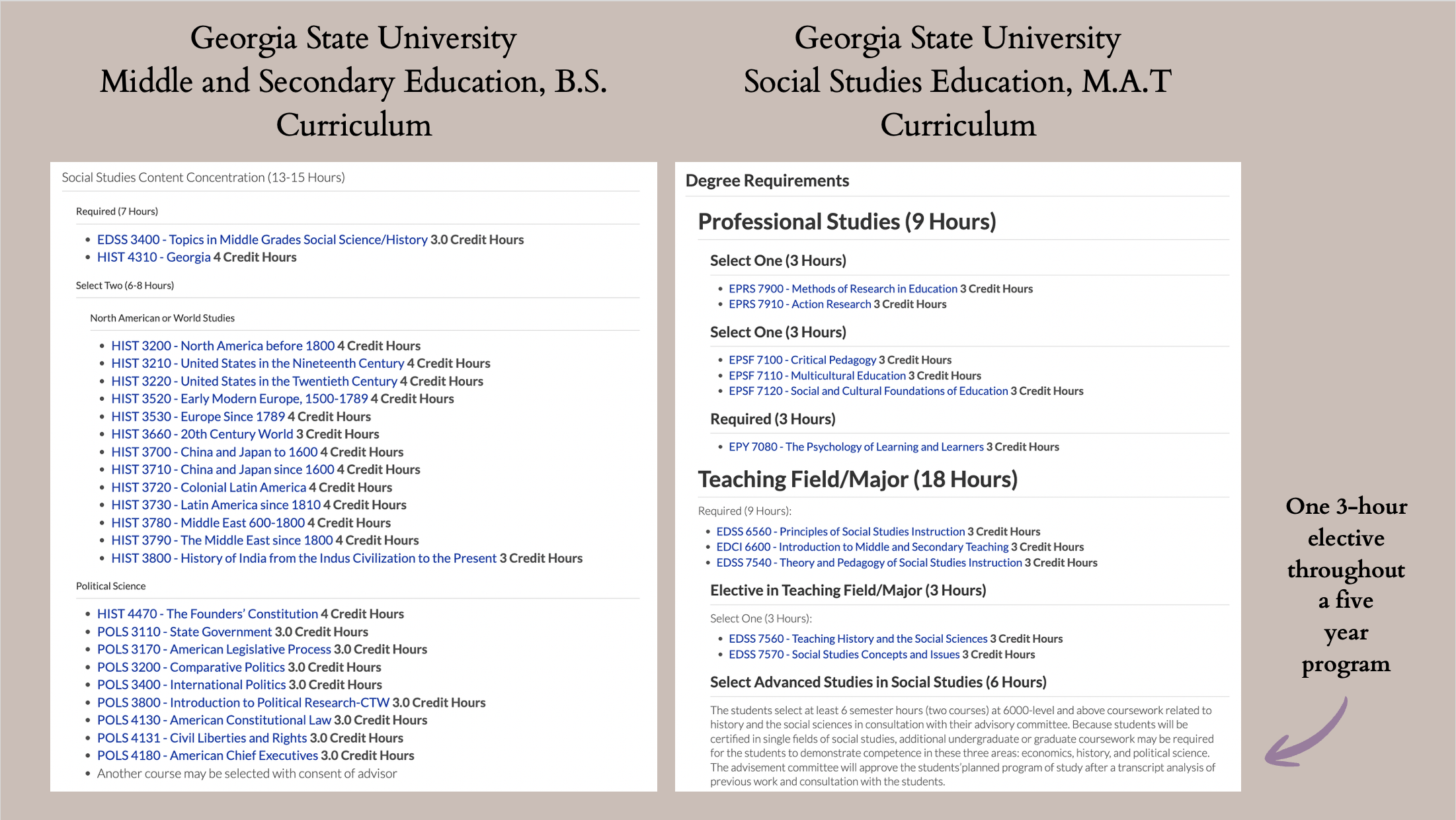
There is also a structural problem. Women's history is often treated as a specialized elective in higher education rather than an essential part of historical training. Many educators follow conventional certification routes without ever taking a course devoted to women's history. Then we ask those educators to teach a complete history of the United States, Georgia, or the world. How can we teach what we have never been taught?
This isn't simply an individual teacher's failure. It's a problem of preparation and curriculum. When women's history is optional in the training of historians and teachers, its inclusion in schools can become optional, too. So if educators are not consistently prepared to teach women's history, how visible are women in the materials we use every day? This leads us to our next question...
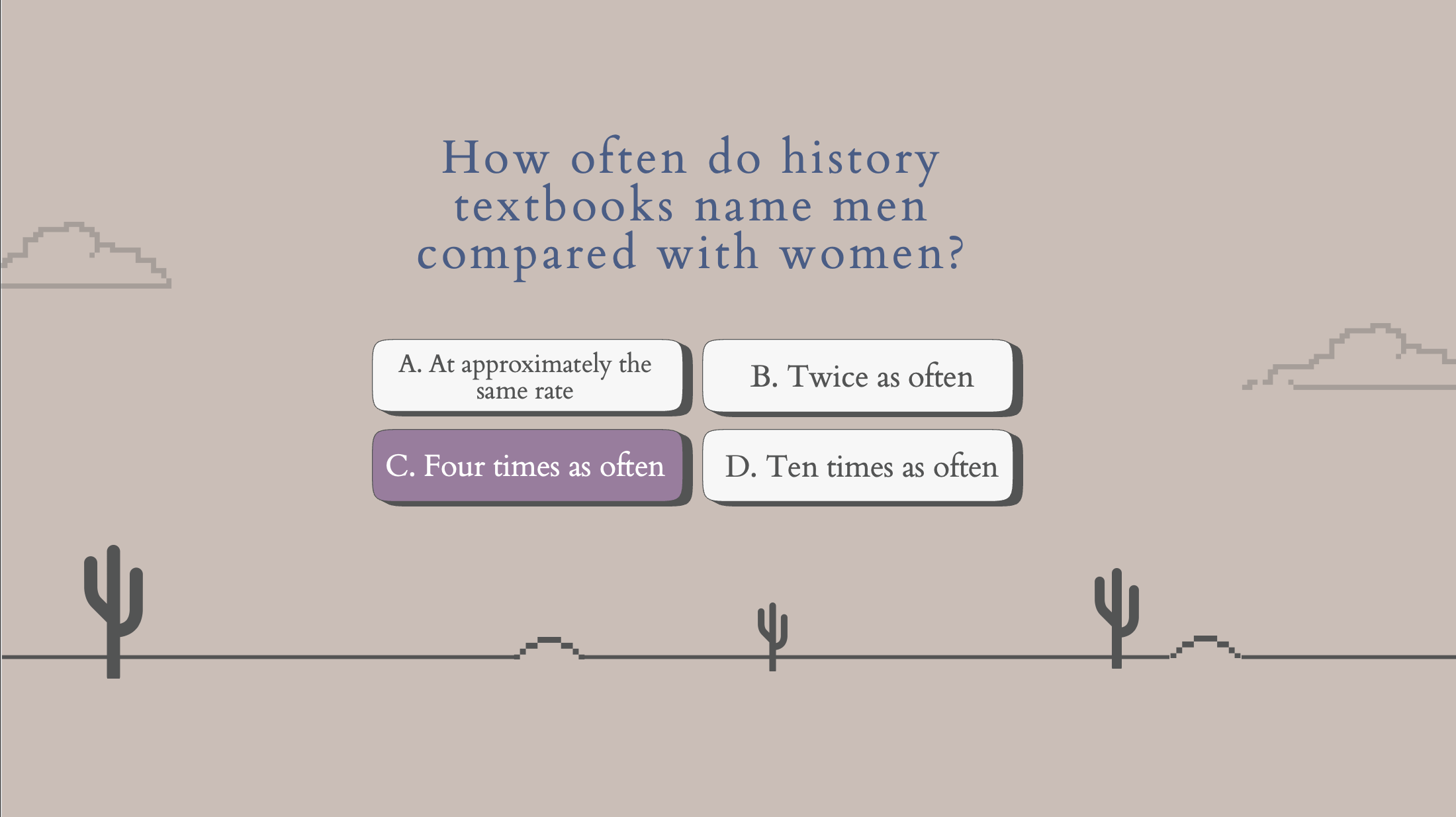
That is more than a question of counting names. It raises questions about what students are taught to recognize as historically significant.
Think about the textbooks, lesson plans, primary sources, museum exhibits, and online resources we use. Who appears in the headlines? Whose decisions drive the narrative? Who is described as making history, and who appears only in the background?
Consider a unit on the American Revolution. We might cover political leaders, military commanders, constitutional debates, and the founding of the nation. But what happens to our understanding when we also examine women's roles in boycotts, household economies, political communication, wartime labor, and debates over citizenship?
The point is not to insert a few additional biographies. It is to examine how the historical process itself changes when we include people whose work, influence, and experiences have been overlooked.
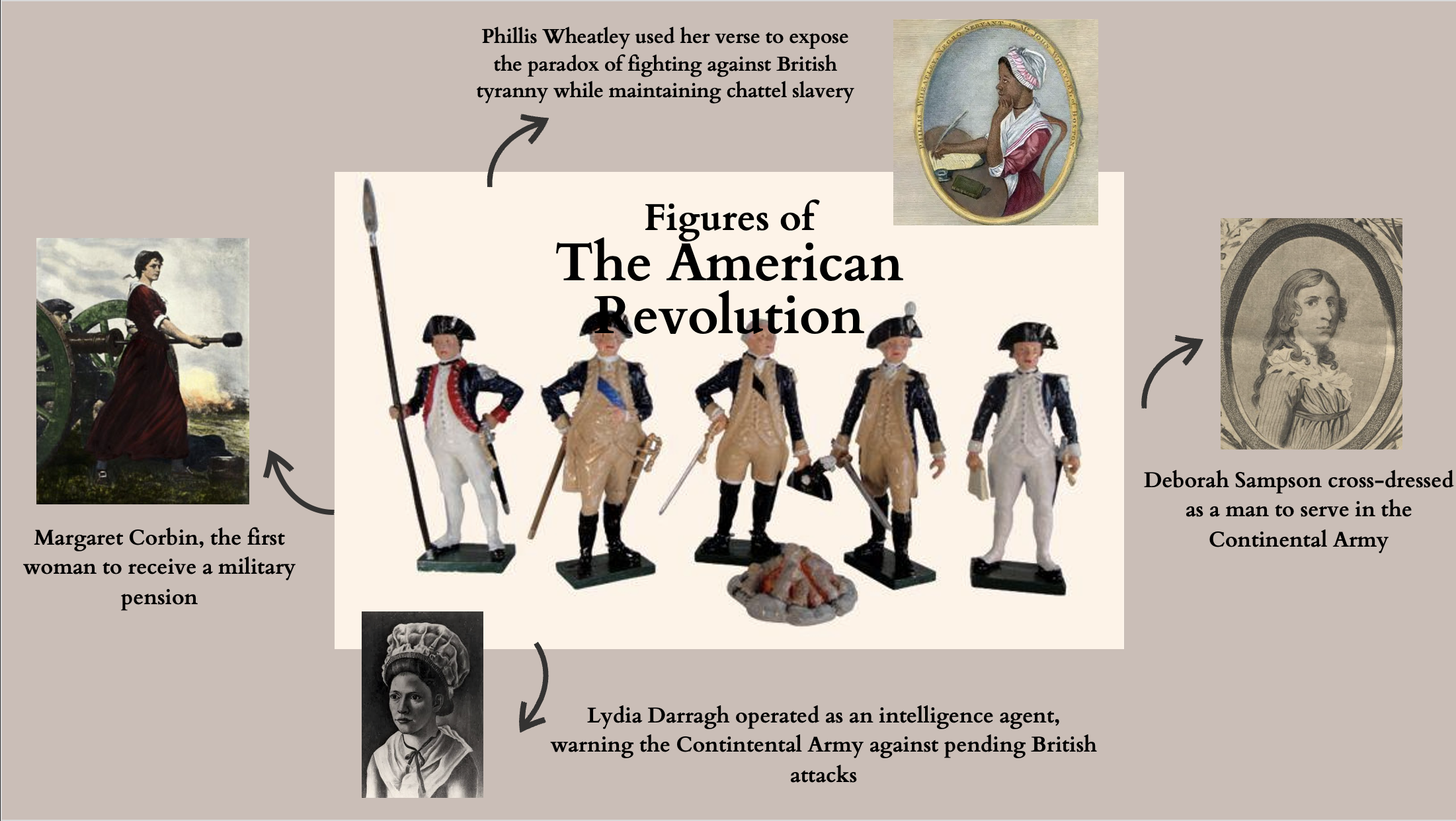
And we need to ask whose experiences are being included. Women's history is not one story. Race, ethnicity, class, region, and political beliefs shaped women's lives in very different ways. If we teach only the experiences of prominent white, middle-class women, we can reproduce the same problem of exclusion within women's history itself.
A history textbook can contain facts that are accurate and still leave students with an incomplete picture of the past. But even if we put more women into our materials, does that mean students experience the classroom differently?
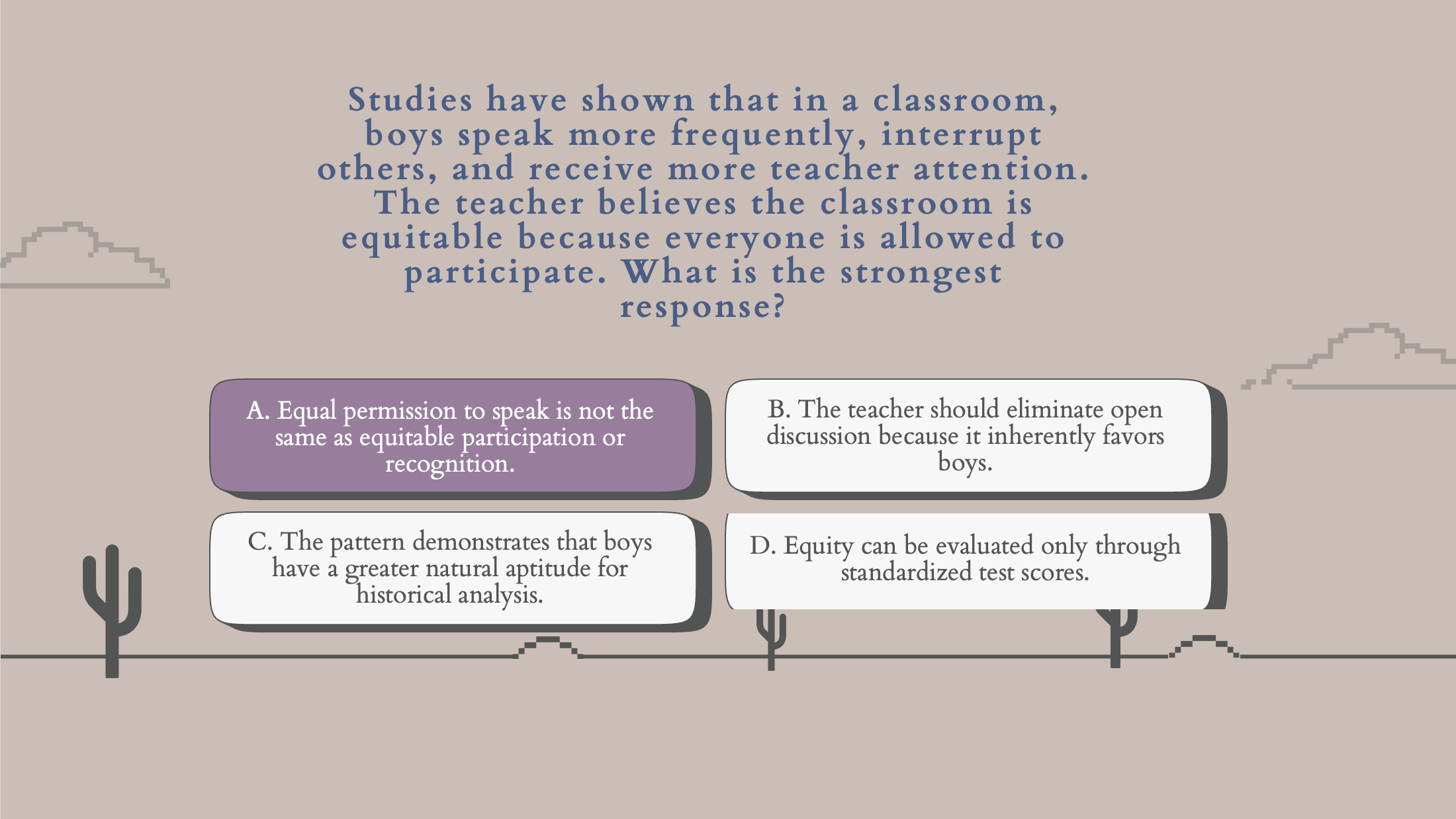
Integrating women's stories into the curriculum is only half the battle. Students also need to feel that they belong in history classrooms and that historical inquiry is something they can participate in and pursue professionally.
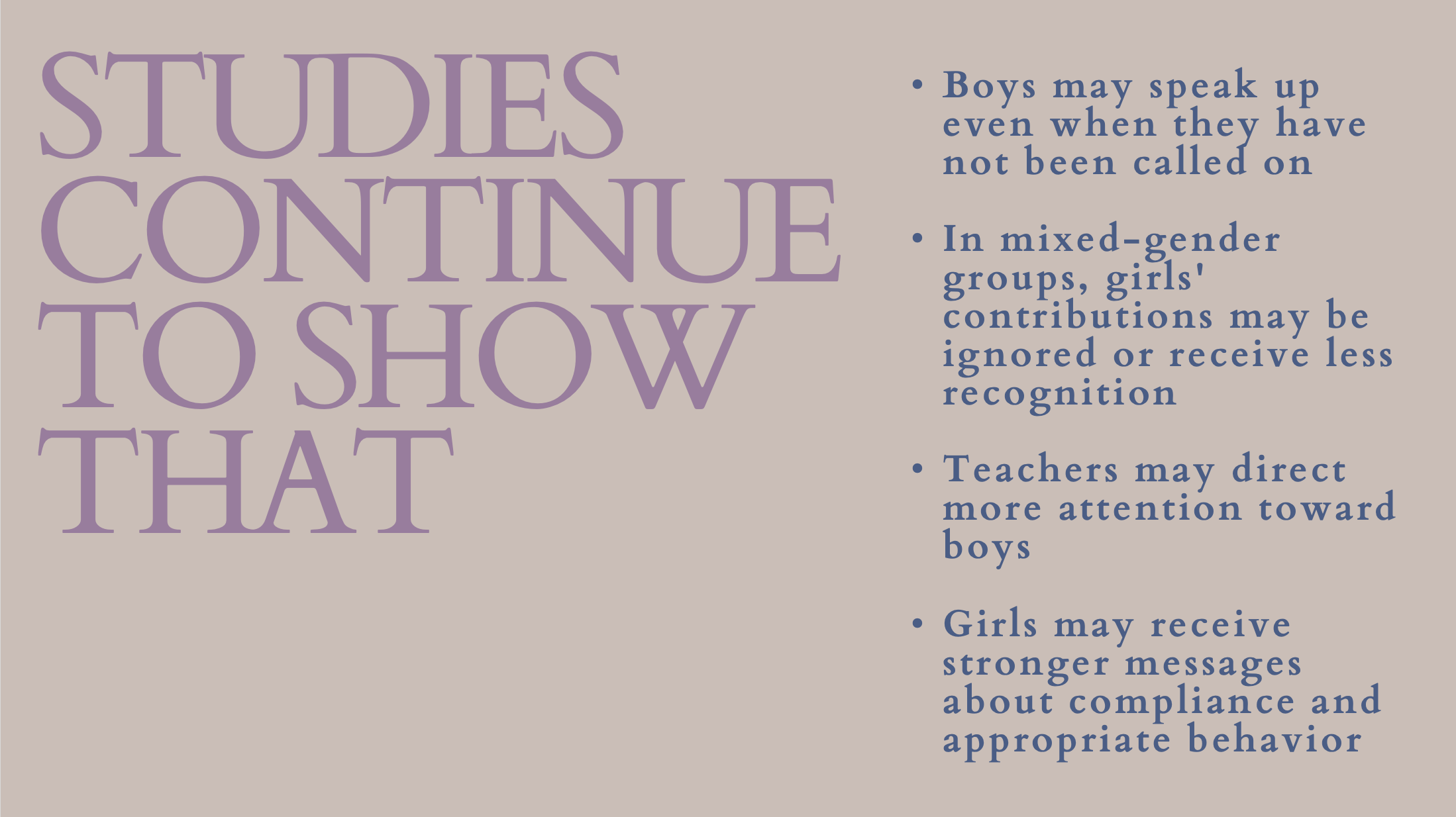
These patterns deserve attention because being present in a classroom is not the same as having your ideas taken seriously. This matters especially in history, where students learn to build arguments, interpret evidence, challenge established narratives, and decide whose accounts deserve consideration.
If students repeatedly encounter historical accounts in which men act and women appear in the margins, while also experiencing classroom dynamics where their own contributions receive less attention, the message can reinforce itself.
We shouldn’t assume every classroom exhibits these patterns, nor that gender alone explains every difference. Instead, we can ask useful questions:
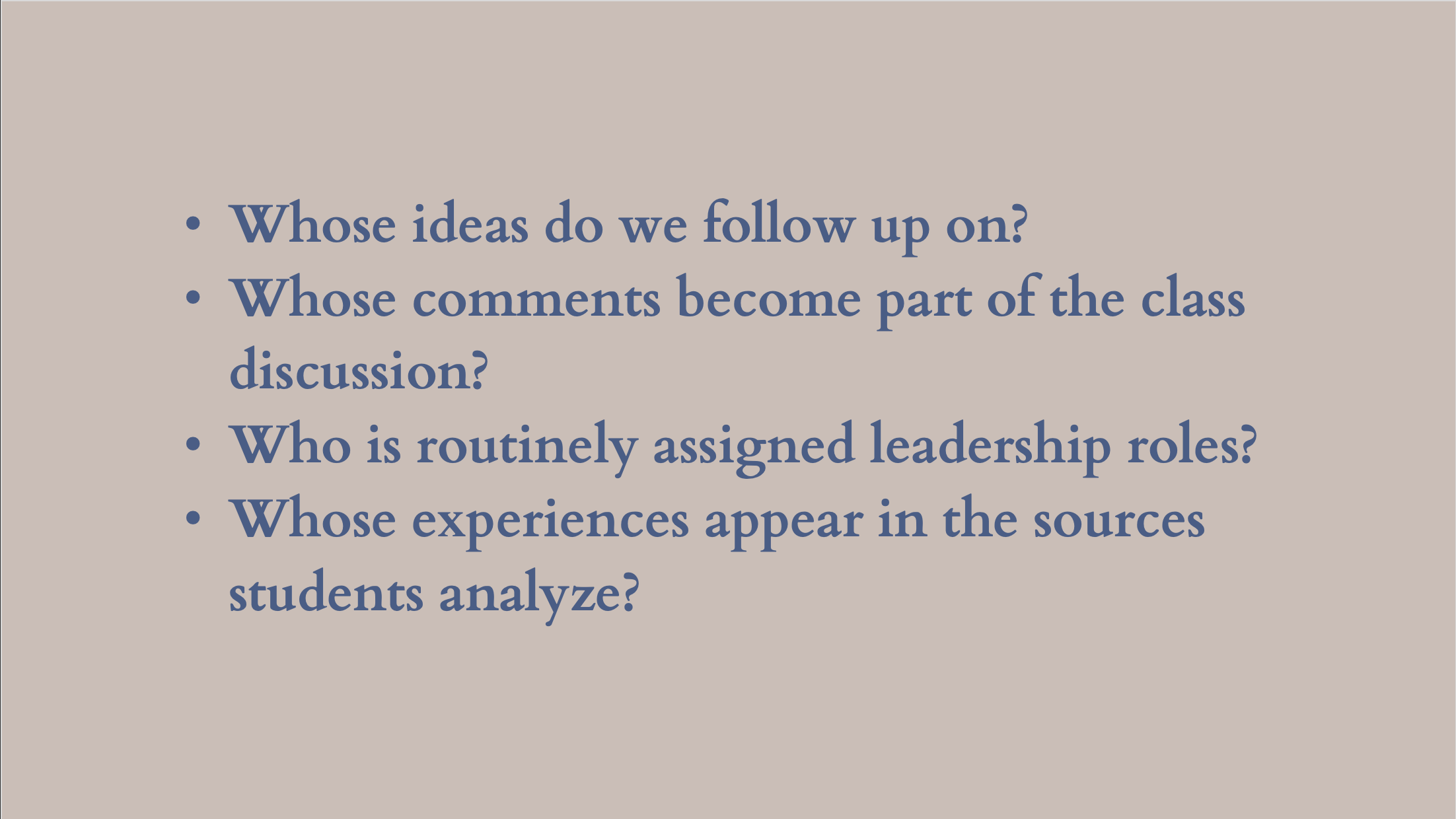
As historians and educators, we can make participation and representation visible parts of our teaching practice.
These classroom experiences take place within a larger system. Let's look at how often women's voices actually make it into instruction.
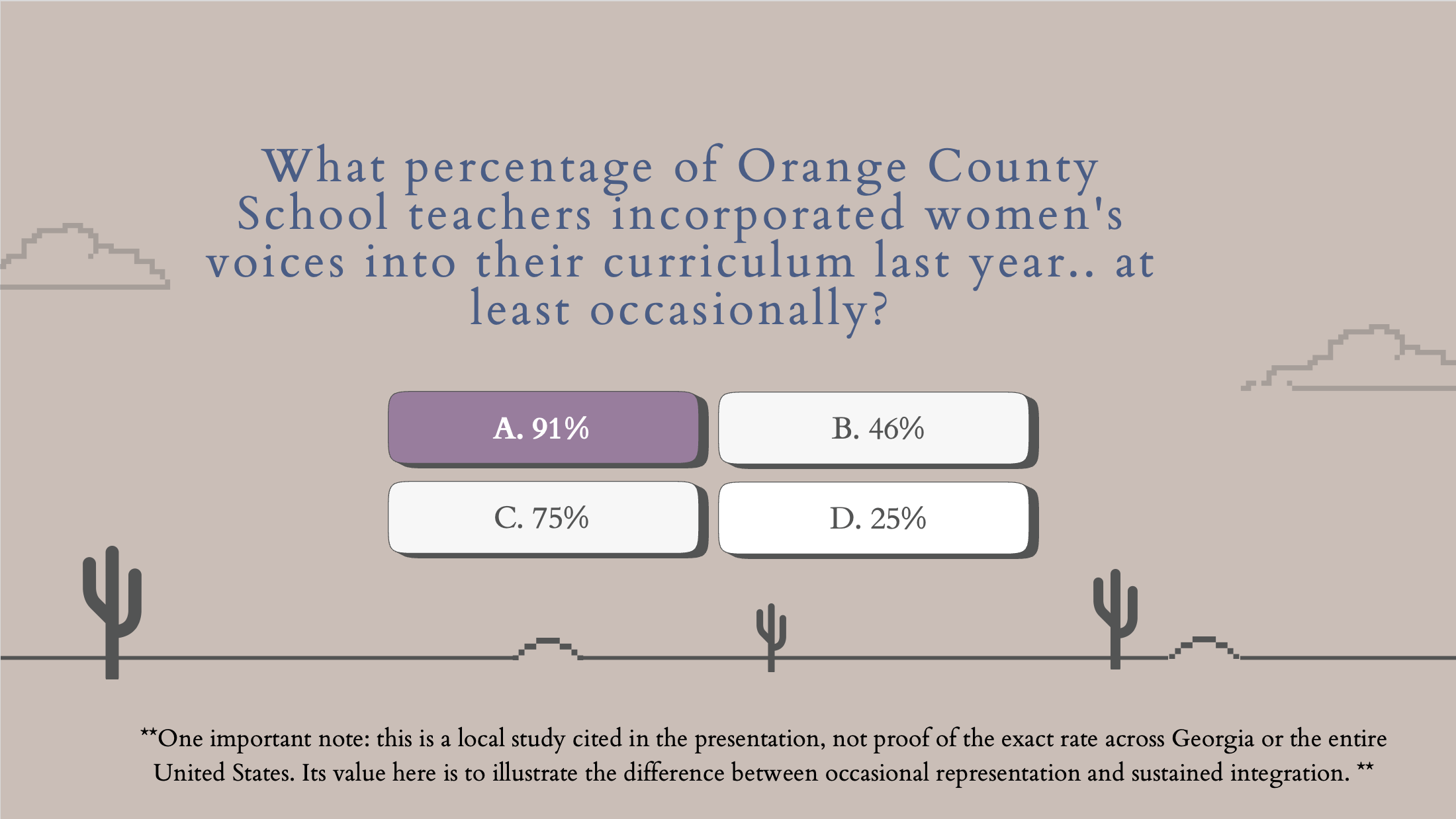
But further reports show that only 25% did so once a week or more, while 46% did so once a month or less.
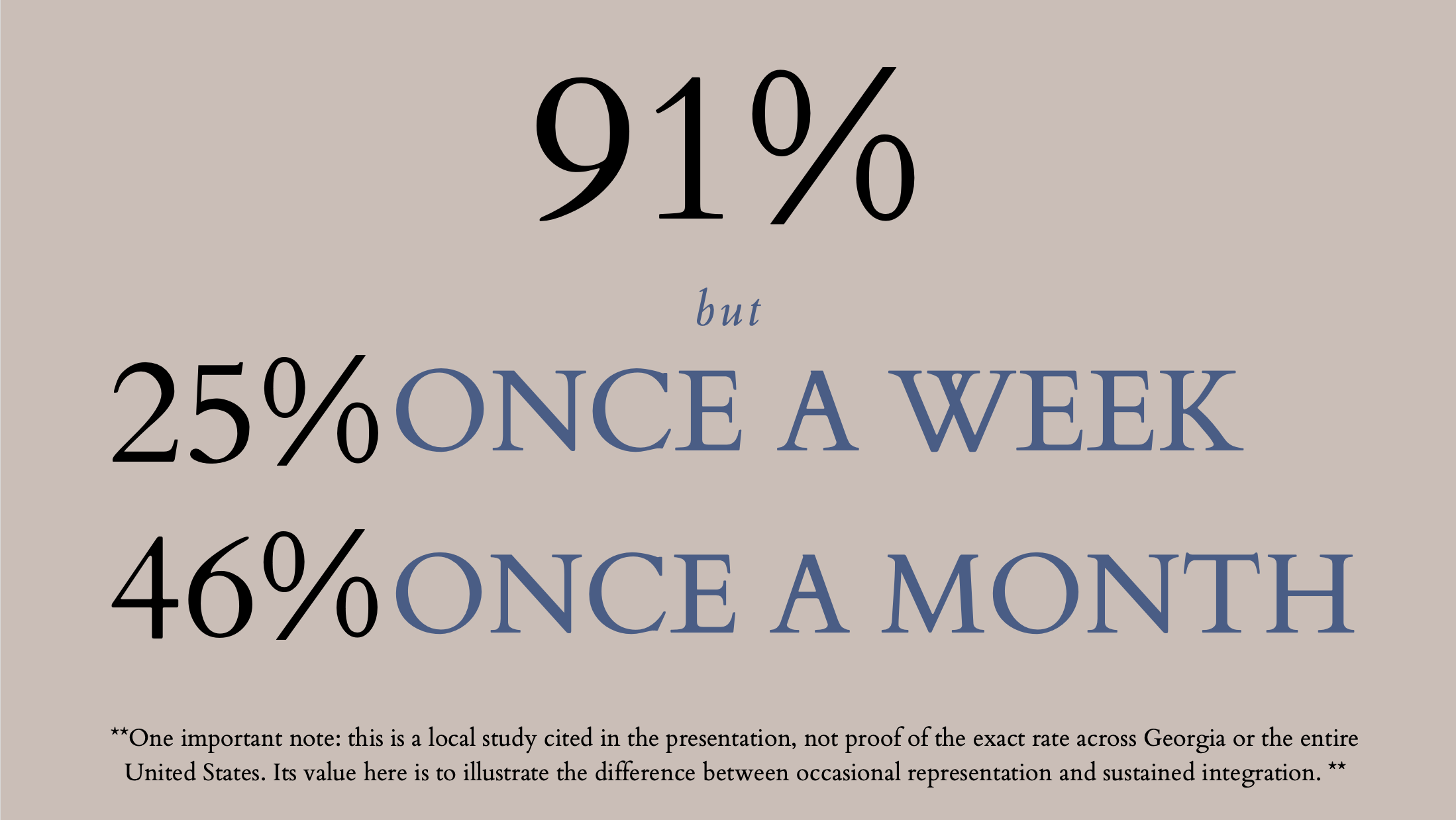
In other words, including women sometimes is not the same as making women's experiences an integral part of how history is taught. Think about the implications for a semester-long course. A woman might appear during a unit on women's suffrage, only to disappear from subsequent discussions of economics, politics, war, science, labor, or civil rights. Students may come away believing that women entered history at a few exceptional moments, rather than having participated in every period of human history
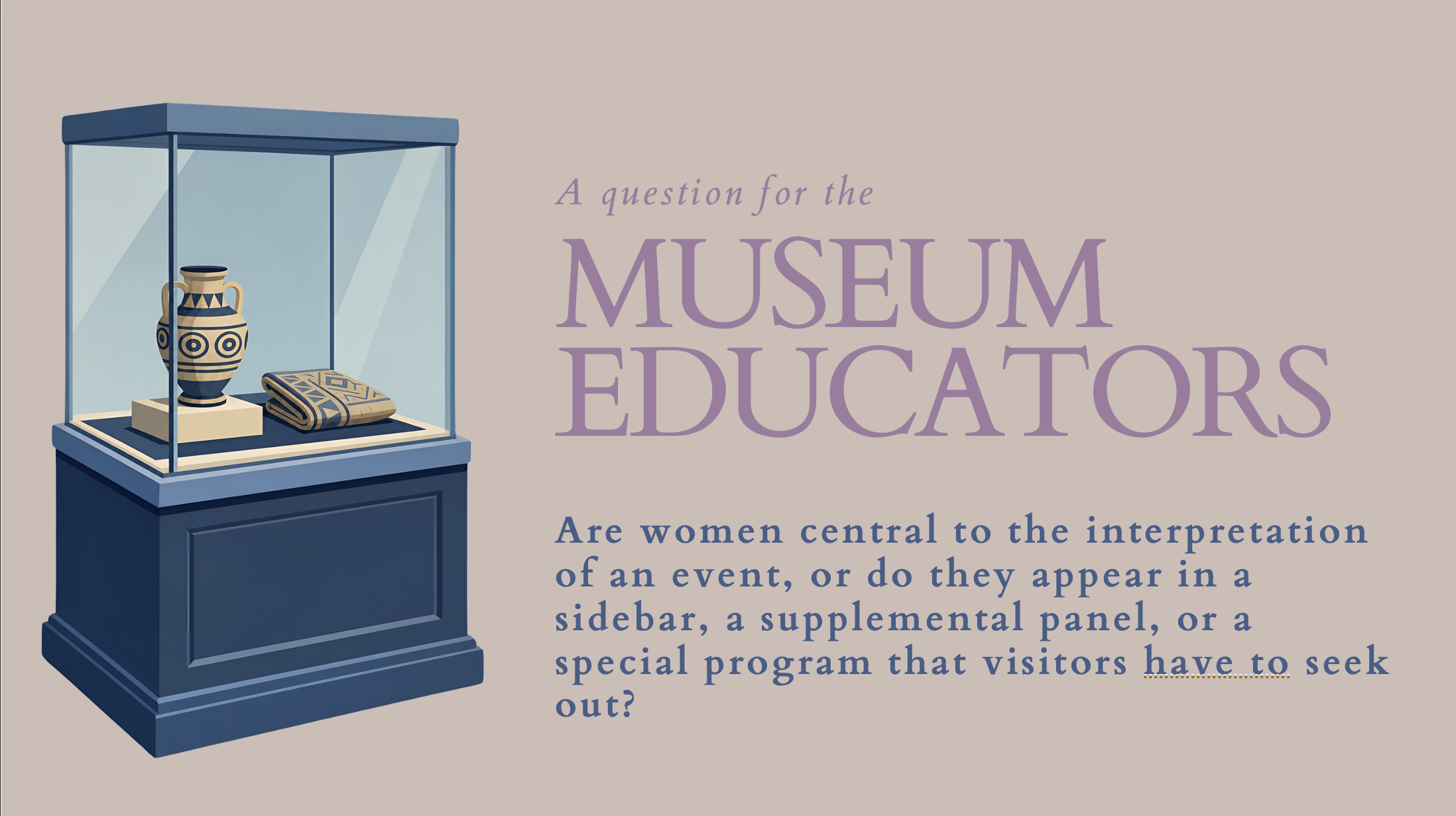
For museum educators, a similar question applies to exhibitions and public programming: Are women central to the interpretation of an event, or do they appear in a sidebar, a supplemental panel, or a special program that visitors have to seek out? The goal is not to mention women in every sentence. It is to make sure their experiences and actions are considered wherever they are historically relevant.
So what prevents educators from doing this consistently, even when they recognize its importance?
From the following, which structural barrier most directly contributes to women's history being overlooked in schools?
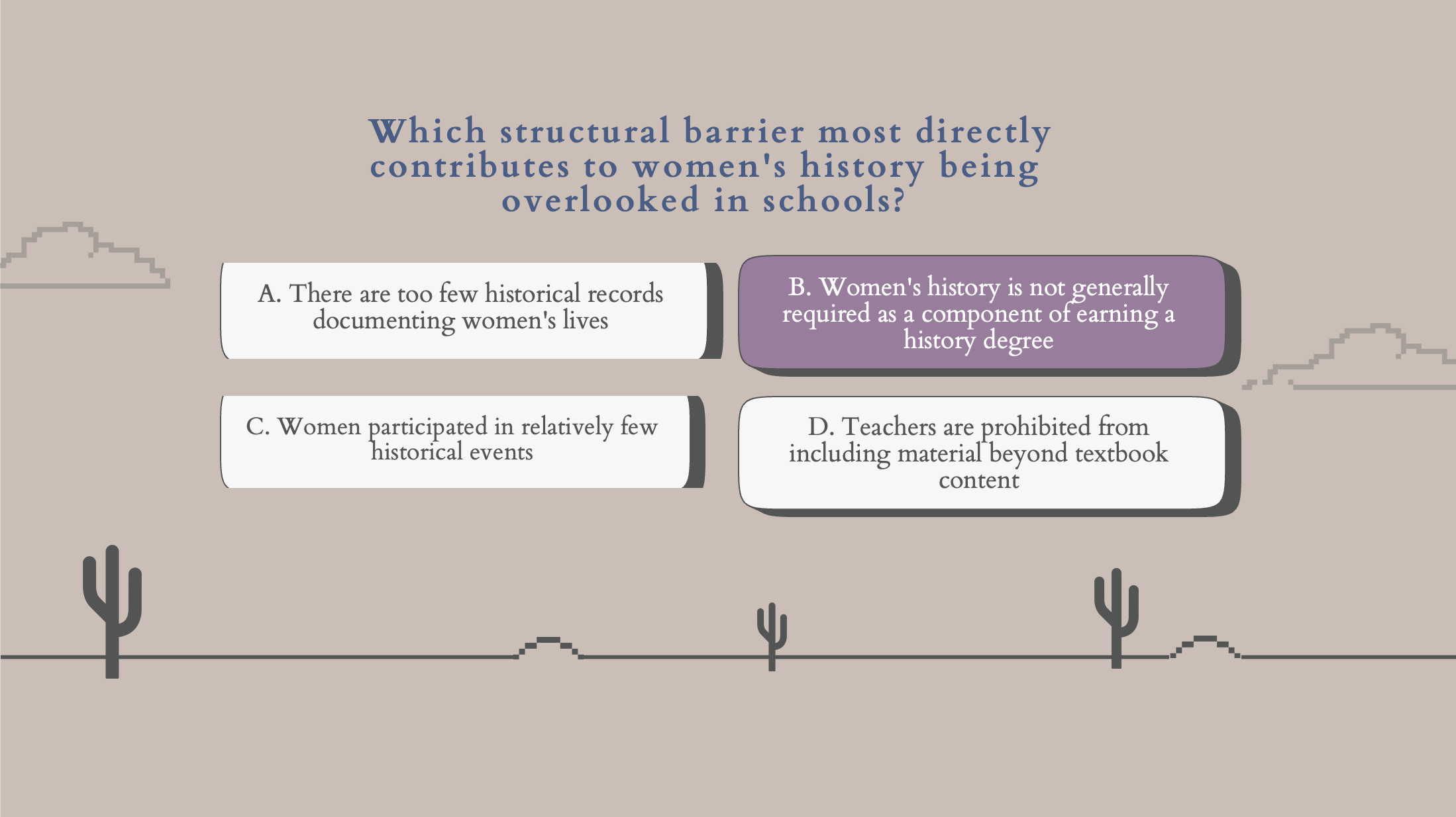
If a teacher's degree did not require women's history, if professional development does not fill the gap, if standards offer little specific guidance, and if the available textbooks provide limited representation, then inclusion depends heavily on individual initiative.
That places an enormous burden on educators who are already managing crowded curricula, limited preparation time, competing standards, and multiple responsibilities. We cannot solve a structural problem simply by telling every teacher to work harder. We need practical resources that make it easier to teach women's history accurately and in alignment with the skills students are expected to learn.
That is where the Remedial Herstory Project comes in. We recognize that educators are busy. We need resources that are credible and ready to use. We provide free videos and lesson plans that can help you bring women's history into your teaching without having to create everything from scratch.
For teachers, that can mean integrating a primary source, adding a new historical perspective, or rethinking a familiar topic without having to redesign an entire course. For museum educators and public historians, the same approach can help broaden interpretation, develop educational programming, and connect visitors with people and experiences that traditional narratives may overlook.
You may be wondering how to access our offerings.
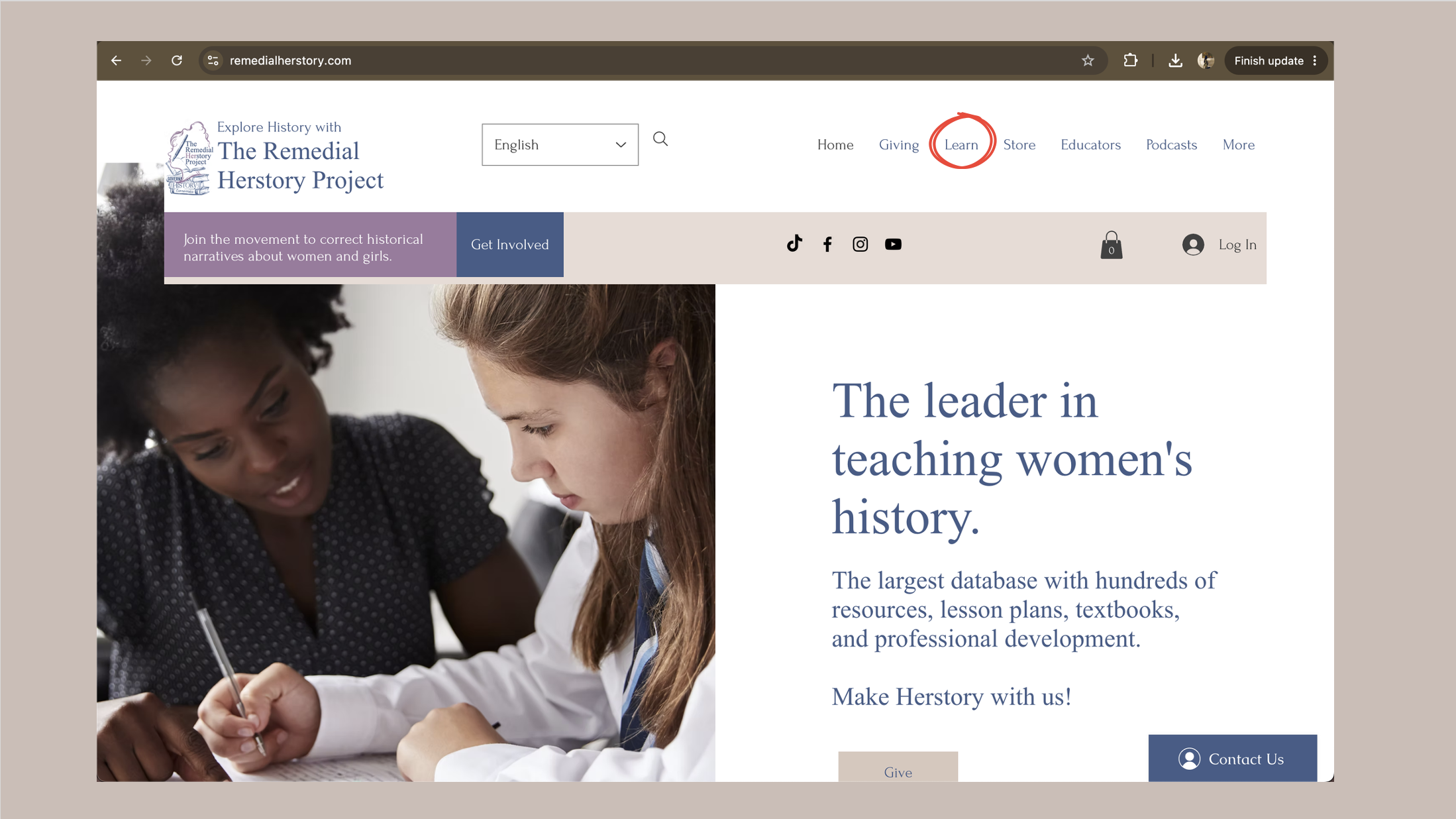
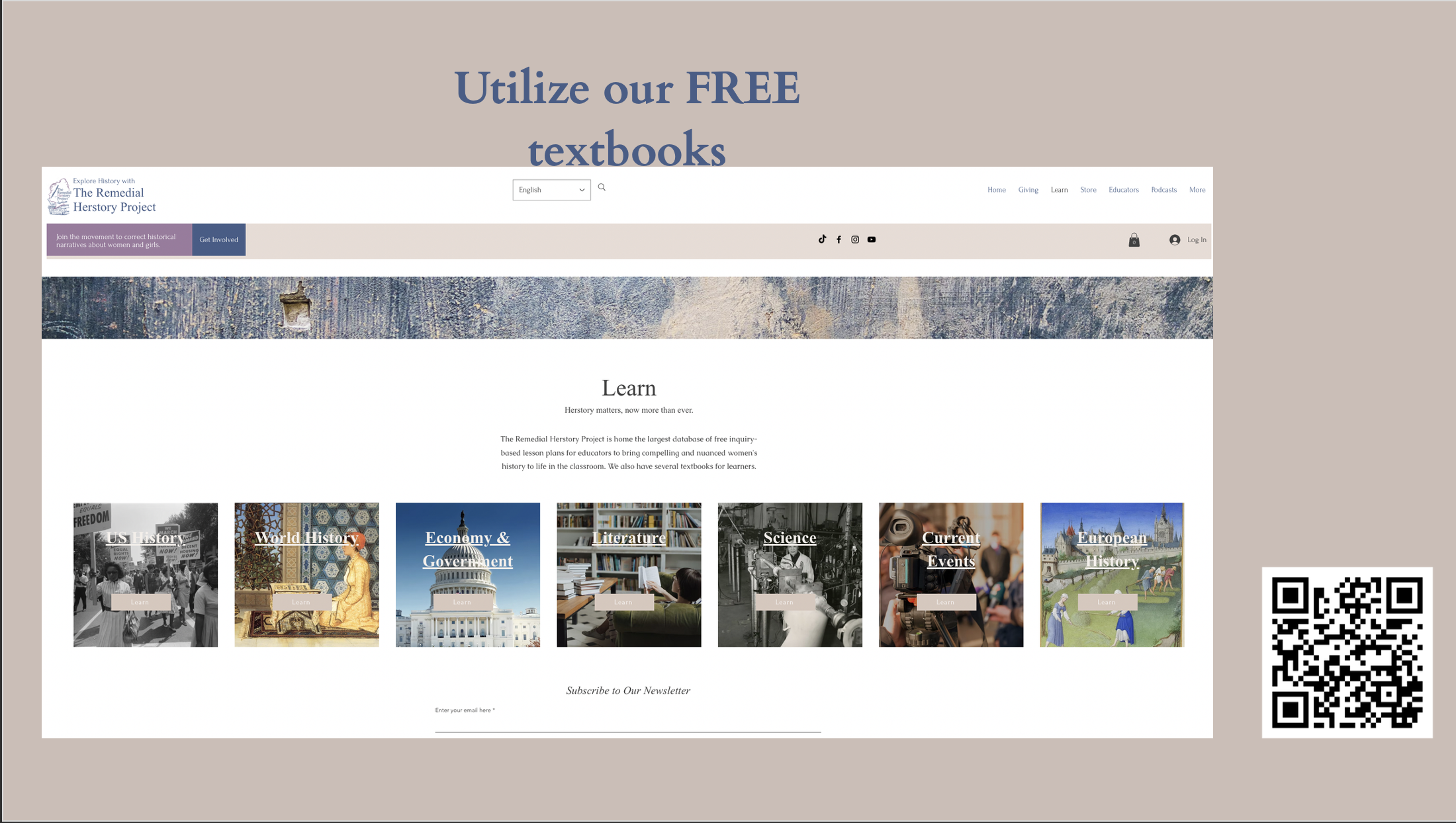
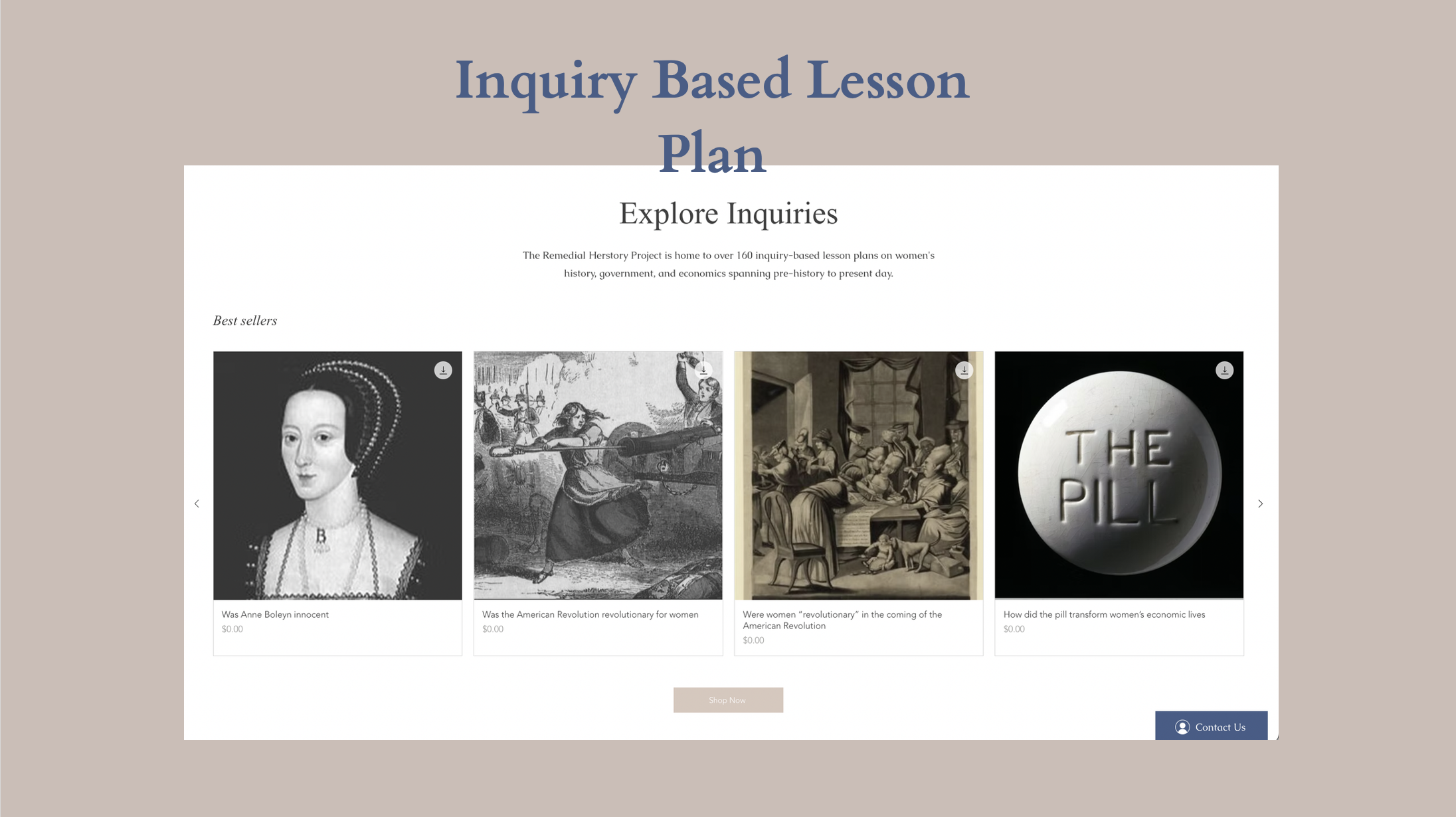
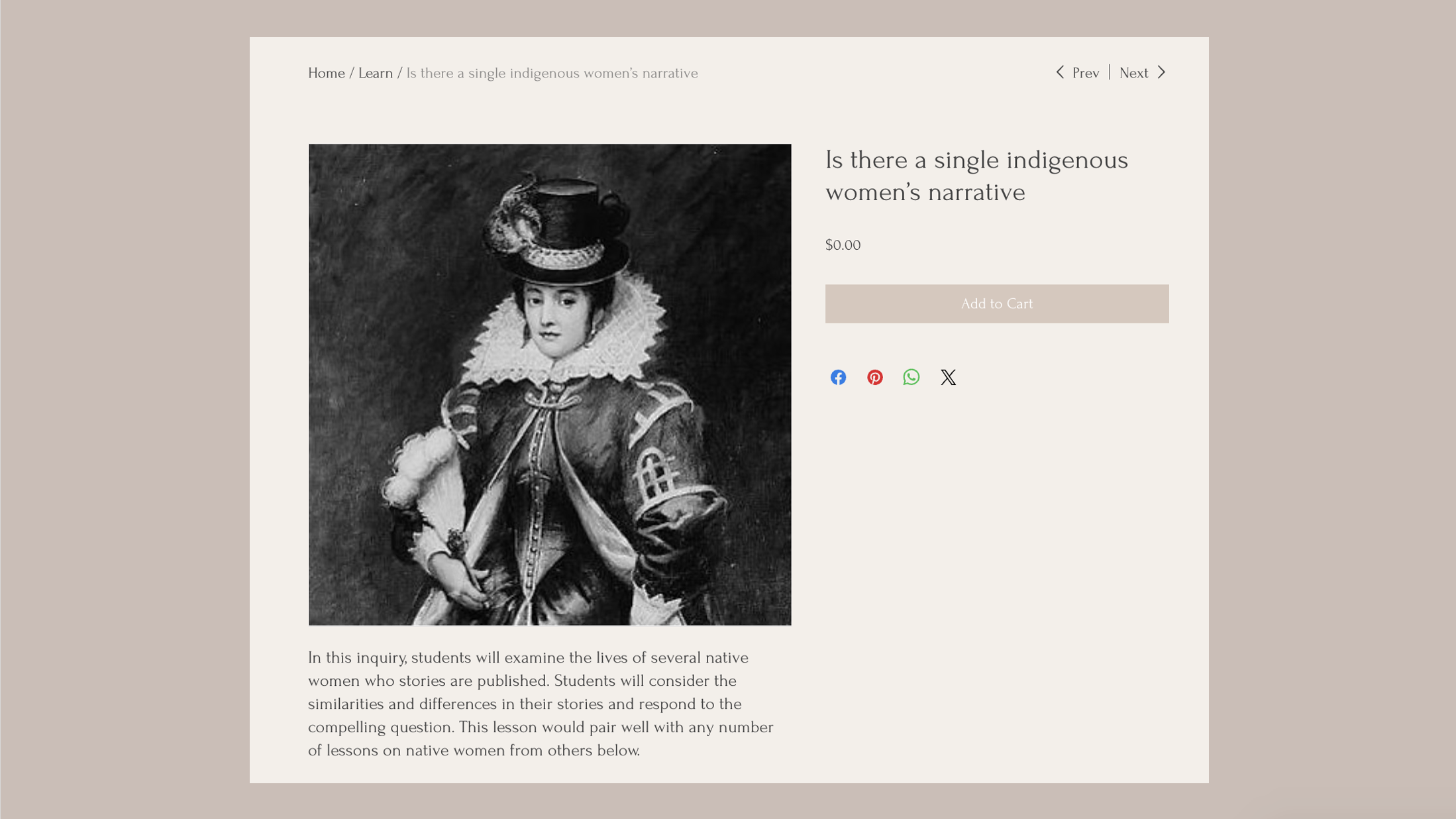
After taking time to explore the home page, you can select the “Learn” tab at the top of the page. This is the hub to all of our resources.
One option you have is our textbooks. Depending on what you’re teaching, you’d select the category and find a list of chapters. Each chapter, alongside background information, is accompanied by podcasts and recommendations for films, books, and primary sources.
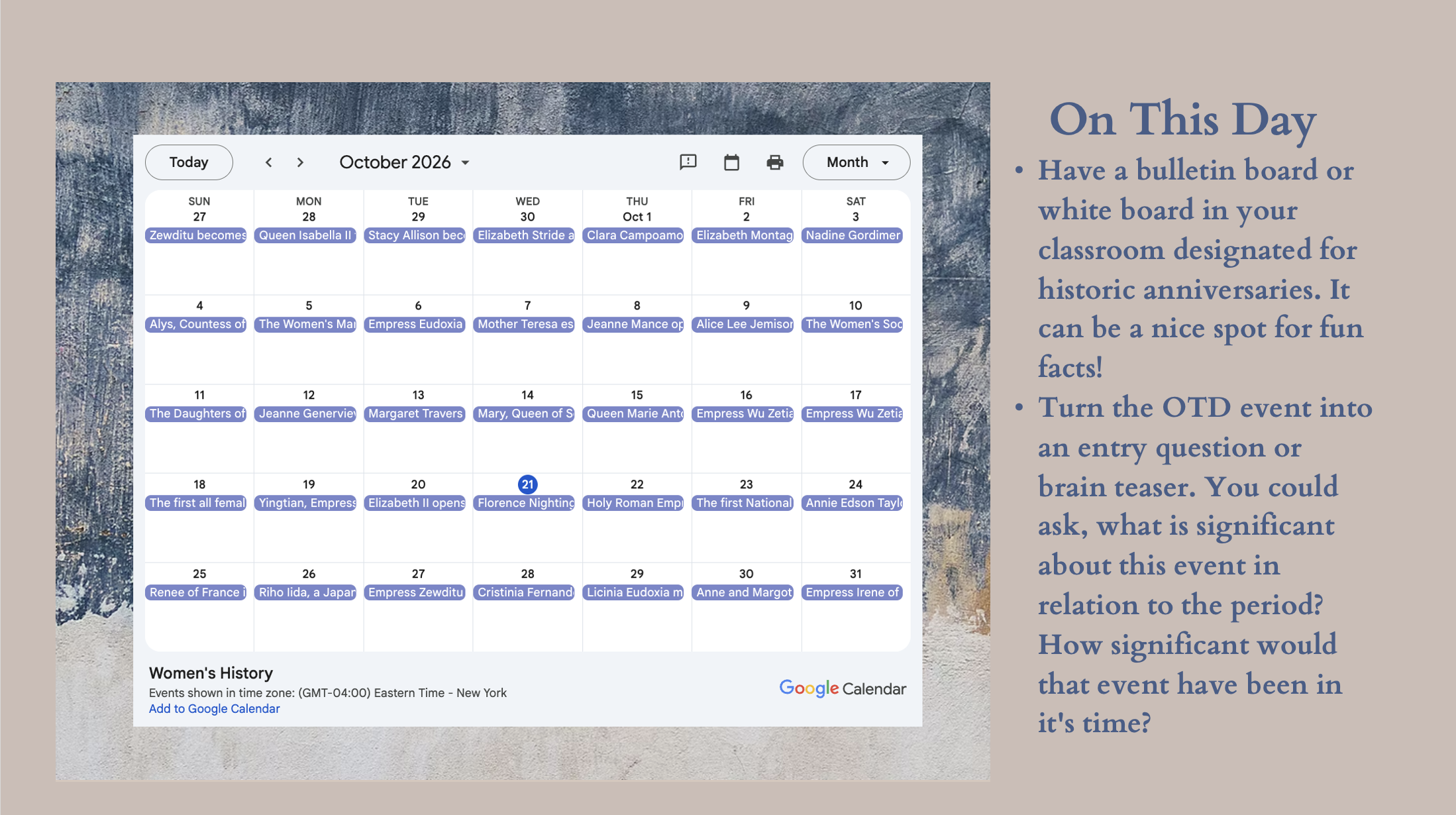
If you were to scroll past the textbooks, you’d find our “On This Day” calendar filled with historic anniversaries. You can integrate these dates with a bulletin board in your classroom or a brain teaser for students.
But what we are most known for, and perhaps what we’re most proud of...is our inquiry based lesson plans. You can find these at the bottom of each page.
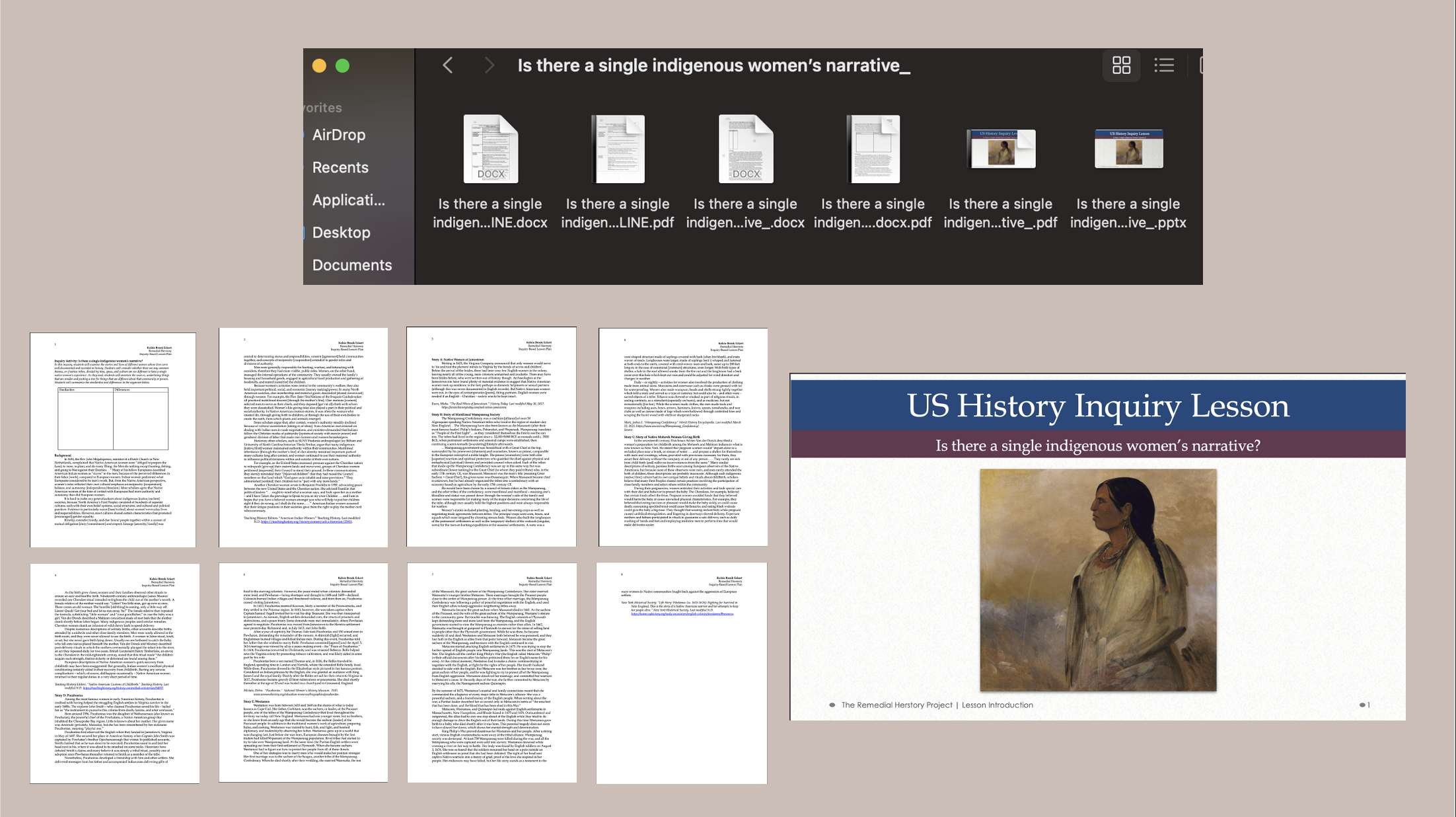
The download appears as a zip file. And there you’ll find an extensive inquiry activity with background information, primary sources, and a response forum for students to complete as a class, in groups, or individually. There is also a powerpoint lesson plan with a built in transcript on the zip file. And this is just one example of the hundreds of lesson plans available throughout the site.
You can explore the resources, take what works for your classroom or institution, and use them to enrich the history you are already teaching.
Because women's history isn't something we simply add to the curriculum. It changes how we understand the curriculum we already teach.